

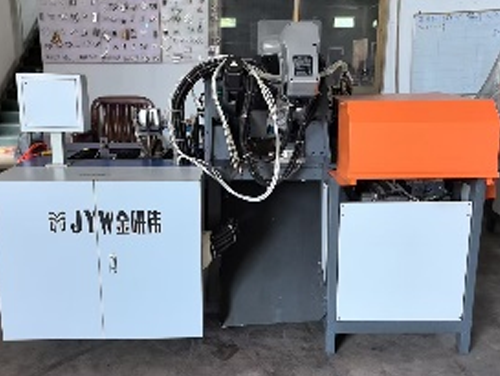
Expansion Angle Bracket Machine Quality Control Methods
Industry Background and Market Demand
Expansion angle brackets are critical structural components widely used in construction, aerospace, and industrial machinery. These brackets provide stability and load-bearing support, making their mechanical integrity non-negotiable. The increasing demand for lightweight yet durable materials in modern construction has driven manufacturers to adopt advanced quality control (QC) methods in production.
The market expects expansion angle brackets to meet stringent international standards such as ASTM, EN, and ISO. Manufacturers must ensure dimensional accuracy, material consistency, and fatigue resistance while maintaining cost efficiency. This requires a systematic approach to QC, integrating precision machining, material testing, and process validation.
Core Concepts and Key Technologies
Precision Machining and Tolerance Control
Expansion angle brackets are typically manufactured using CNC (Computer Numerical Control) machining or stamping processes. CNC machining ensures high repeatability, with tolerances as tight as ±0.05 mm. Stamping, while cost-effective for high-volume production, requires rigorous die maintenance to prevent burrs and dimensional deviations.
Non-Destructive Testing (NDT)
Ultrasonic testing and X-ray inspection are commonly used to detect internal defects such as microcracks or voids. Eddy current testing is applied for surface flaw detection, particularly in aluminum and stainless steel brackets.
Material Certification and Traceability
High-grade steel, aluminum alloys, and composite materials must undergo spectrographic analysis to verify chemical composition. Batch traceability ensures compliance with industry certifications and facilitates recalls if defects are identified post-production.
Product Structure, Performance, and Manufacturing
Material Selection
- Carbon Steel (Q235, S355JR): High tensile strength, cost-effective, but requires anti-corrosion coatings.
- Stainless Steel (304, 316): Corrosion-resistant, suitable for harsh environments.
- Aluminum Alloys (6061, 7075): Lightweight, ideal for aerospace applications.
Manufacturing Processes
1. Laser Cutting: Ensures clean edges and minimizes thermal distortion.
2. Press Brake Forming: Achieves precise bend angles with minimal springback.
3. Welding (TIG/MIG): Critical for multi-component brackets; penetration depth must be verified.
4. Surface Treatment: Powder coating, anodizing, or galvanizing enhances durability.
Key Factors Affecting Quality
1. Material Inconsistencies: Variations in alloy composition can lead to premature failure.
2. Machining Errors: Tool wear or improper CNC programming causes dimensional inaccuracies.
3. Thermal Stress: Uneven cooling after welding may induce microcracks.
4. Coating Adhesion: Poor surface preparation results in flaking or corrosion.
Supplier Selection and Supply Chain Standards
Reliable suppliers must demonstrate:
- ISO 9001/AS9100 Certification: Ensures adherence to standardized QC protocols.
- Material Test Reports (MTRs): Validates raw material properties.
- Process Capability Index (Cpk): A Cpk ≥1.33 indicates stable production.
- Lead Time Consistency: Delays disrupt just-in-time manufacturing.
Common Industry Challenges
1. Defect Detection in High-Volume Production: Manual inspection is time-consuming; automated optical inspection (AOI) systems are increasingly adopted.
2. Cost vs. Performance Trade-offs: Aerospace-grade materials improve durability but raise production costs.
3. Regulatory Compliance: Evolving standards require continuous process updates.
Applications and Case Studies
Construction Sector
A European contractor reported a 15% reduction in bracket failure rates after implementing real-time laser scanning during CNC machining.
Aerospace Industry
An aircraft manufacturer switched to 7075 aluminum brackets with automated ultrasonic testing, reducing weight by 20% without compromising load capacity.
Current Trends and Future Outlook
1. AI-Powered QC: Machine learning algorithms analyze production data to predict defects before they occur.
2. Additive Manufacturing: 3D-printed titanium brackets offer complex geometries with minimal waste.
3. Sustainable Materials: Recycled aluminum and bio-composites are gaining traction.
FAQ
Q: How often should stamping dies be maintained?
A: Dies should be inspected every 50,000 cycles or after visible wear is detected.
Q: What is the acceptable porosity level in welded brackets?
A: Per AWS D1.1, porosity must not exceed 1.5% of the weld area.
Q: Can expansion angle brackets be reused?
A: Reuse depends on material fatigue; stainless steel brackets typically withstand multiple load cycles if undamaged.
By integrating advanced QC methods, manufacturers can ensure expansion angle brackets meet evolving industry demands while maintaining cost efficiency and regulatory compliance.
เว็บไซต์นี้ใช้คุกกี้เพื่อให้แน่ใจว่าคุณได้รับประสบการณ์ที่ดีที่สุดบนเว็บไซต์ของเรา
 English
 हिन्दी
 Tiếng Việt
 বাংলা
বাংলা



 โทรศัพท์
ความคิดเห็น
(0)