

Industrial-Grade CNC Sawing Machine: Professional Guide
The Industrial-grade CNC Sawing Machine is an essential tool for modern manufacturing, designed for high-precision cutting of metals, plastics, wood, and composite materials. Combining computer numerical control (CNC) technology with robust industrial design, these machines offer efficiency, accuracy, and reliability in large-scale production environments. Whether in automotive, aerospace, furniture, or metal fabrication industries, CNC sawing machines streamline workflow, reduce human error, and ensure consistent cut quality.
Industrial-grade CNC sawing machines are widely used in diverse industries due to their versatility:
| Industry | Application |
|---|---|
| Automotive | Cutting metal sheets, structural components, and chassis parts |
| Aerospace | Precision cutting of lightweight alloys and titanium components |
| Furniture & Woodworking | Cutting wooden panels, laminates, and composite boards |
| Metal Fabrication | Steel, aluminum, and copper profile cutting |
| Electronics & Appliances | Cutting aluminum frames and casing components |
Key Benefits in Applications:
High repeatability ensures uniform product quality.
Capable of handling complex shapes and multiple materials.
Reduces manual labor and improves overall productivity.
Industrial-grade CNC sawing machines consist of several critical components:
CNC Control System:
Acts as the brain of the machine, controlling blade speed, feed rate, and cutting path.
Allows for programming of complex cutting sequences.
Saw Blade & Arbor:
High-quality hardened blades suitable for different materials.
Arbor ensures stable rotation and precise alignment.
Machine Bed & Frame:
Heavy-duty frame reduces vibrations and enhances stability.
Constructed from cast iron or reinforced steel.
Feed & Positioning System:
Linear guides and servo motors ensure precise material positioning.
Supports automated material feeding in production lines.
Safety Features:
Blade guards, emergency stop buttons, and automatic shutdown systems.
Designed to prevent accidents and protect operators.
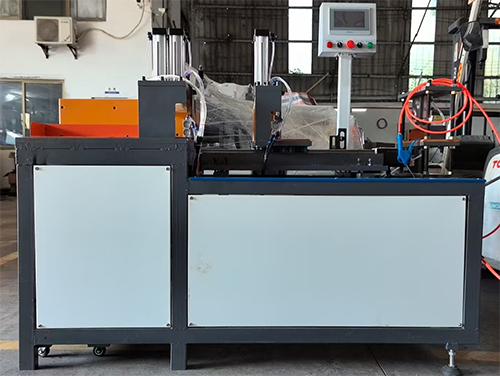
Proper maintenance is crucial to prolong the lifespan and performance of CNC sawing machines. Recommended maintenance practices include:
| Maintenance Task | Frequency | Description |
|---|---|---|
| Blade Inspection & Replacement | Weekly | Check for wear, cracks, and dullness; replace if necessary |
| Lubrication | Weekly | Lubricate guide rails, bearings, and moving parts |
| CNC System Check | Monthly | Verify software functionality, update firmware if needed |
| Cleaning | Daily | Remove metal shavings, dust, and debris from machine surfaces |
| Coolant System Maintenance | Weekly | Check fluid levels, clean filters, and ensure proper flow |
Tips for Maintenance:
Always power off the machine before performing maintenance.
Use manufacturer-recommended lubricants and replacement parts.
Keep a maintenance log to track issues and preventive actions.
For safe and efficient operation, consider the following precautions:
Material Suitability:
Confirm that the material type and thickness are compatible with the machine’s specifications.
Blade Selection:
Use the correct blade for the material being cut to avoid damage and ensure clean cuts.
Operator Safety:
Always wear protective eyewear, gloves, and ear protection.
Avoid loose clothing or jewelry near moving parts.
CNC Programming:
Double-check cutting paths, feed rates, and spindle speeds before initiating automated operations.
Emergency Protocols:
Familiarize operators with emergency stop and machine shutdown procedures.
Regularly test safety interlocks and sensors.
Precision Cutting: High repeatability ensures consistent dimensions for mass production.
Efficiency: Automated processes reduce cycle time and labor costs.
Versatility: Suitable for multiple materials including metals, wood, and composites.
Durability: Robust construction withstands heavy industrial use.
Safety: Built-in features protect operators and minimize workplace hazards.
The Industrial-grade CNC Sawing Machine represents a vital investment for modern manufacturing. Its combination of precision, automation, and durability makes it indispensable in industries such as automotive, aerospace, furniture, and metal fabrication. By understanding its structure, applications, and maintenance requirements, businesses can maximize productivity, ensure safety, and maintain consistent product quality. With proper care and operation, these machines provide reliable service for years, enhancing both efficiency and profitability in industrial production environments.
เว็บไซต์นี้ใช้คุกกี้เพื่อให้แน่ใจว่าคุณได้รับประสบการณ์ที่ดีที่สุดบนเว็บไซต์ของเรา
 English
 हिन्दी
 Tiếng Việt
 বাংলা
বাংলা



 โทรศัพท์